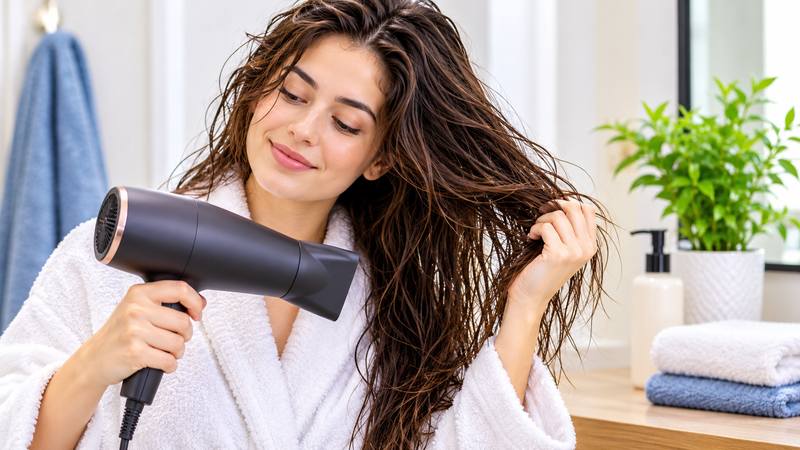
Why Drying Technique Matters
Most people don’t give much thought to how they dry their hair, yet this everyday habit quietly shapes strength, texture, frizz, and how prone strands become to breakage over time. Plenty of people reach for a hair dryer purely to save a few minutes before work or a night out, but the real issue isn’t air-drying versus blow-drying—it’s how heat, tension, friction, and frequency are handled along the way. Neither method wins out for everyone; what suits one head of hair might wear down another. This article doesn’t take sides on tools or techniques. Instead, it lays out practical steps anyone can use to cut back on avoidable damage. In short, healthy drying comes down to managing heat, friction, moisture, and tension, not picking one “correct” method and sticking to it blindly.
Understanding Why Wet Hair Needs Gentle Handling
Wet hair is simply more fragile than dry hair. Once saturated, the cuticle—the outer protective layer—lifts slightly, leaving strands more vulnerable to stretching, snapping, and general wear. Some of this is purely cosmetic, like the temporary frizz or rough texture that disappears once hair dries. Other effects, such as split ends or outright breakage, represent genuine structural damage that won’t undo itself. Rubbing hair roughly with a towel, brushing aggressively, or pulling it into tight styles while it’s still wet all pile on mechanical stress at exactly the moment hair can least afford it. Just how careful you need to be depends on texture, porosity, past chemical treatments, and existing damage—there’s no one-size-fits-all routine that works equally well for straight, wavy, curly, coily, bleached, and chemically treated hair alike.
Preparing Hair Before Applying Heat
Remove excess water gently. Squeeze water out with your hands before you even step out of the shower, then wrap hair loosely in a soft towel or absorbent cloth rather than scrubbing at it. This cuts down on how long hair is later exposed to heat. Steer clear of twisting hair tightly in a towel, particularly if it’s already prone to damage.
Detangle with less pulling. Start from the ends and work your way up, using a wide-tooth comb or whatever method fits your texture best. Resist the urge to force a brush through knots while hair is soaking wet—the goal here is easing tension, not untangling every knot in one go.
Let hair partially air-dry. When you’ve got the time, letting hair dry on its own for a bit reduces how much heat it needs later. That said, this isn’t a hard rule for everyone; staying damp too long or going to bed with wet hair can bring its own set of problems.
Before you dry — quick checklist:
– Remove excess water by hand
– Detangle gently from ends upward
– Allow partial air-drying if possible
Using Heat More Safely
Choose the lowest effective temperature. Too much heat leads to dryness, cuticle wear, split ends, and breakage. Start on low or medium and only turn up the heat if you truly need to—cranking it higher doesn’t necessarily dry hair better, and holding it too close or too long only increases the risk of damage. Dermatology guidance generally favors lower heat settings and less frequent blow-drying as ways to prevent damage.[1][2]
Keep the air moving. Keep the airflow in motion and dry in sections instead of camping out on one spot, which invites localized overheating. A diffuser can help with curly or textured routines, though the right technique still depends on the individual.
Maintain distance and reduce tension. Keep some distance between the tool and your strands rather than pressing it directly against your scalp or hair. Consumer Reports has pointed to roughly six inches as a reasonable distance when using moderate heat.[3] Distance, movement, and moderate heat all work together—adjusting just one of these factors likely won’t cut down on heat exposure enough on its own.
Adapting the Routine to Different Hair Types
Fine or fragile hair does better with lower heat, shorter drying sessions, and as little brushing tension as possible. Thick or dense hair benefits from being sectioned off, with excess moisture removed beforehand. Curly or coily hair tends to fare better with minimal handling and even drying rather than constant reshaping. Bleached, colored, or chemically treated hair calls for extra care, since it’s typically more susceptible to dryness. Hair that’s already damaged benefits more from simply cutting back on heat frequency than from relying on a product to somehow restore it. And if you’re noticing persistent breakage, sudden shedding, or scalp discomfort, that’s a sign to seek individualized advice rather than lean on general tips.
Common Drying Mistakes to Avoid
- Starting at the highest heat setting right away
- Holding heat on one section too long
- Rubbing hair vigorously with a towel
- Brushing forcefully through wet knots
- Using heat tools daily when air-drying would work just as well
- Sleeping with soaking-wet hair
- Assuming heat-protectant products give you a free pass on unlimited heat
- Believing any single product or tool guarantees damage-free results
Building a Practical, Low-Damage Drying Routine
- Gently squeeze out water
- Blot briefly instead of rubbing
- Detangle from ends upward
- Allow partial air-drying when possible
- Apply a heat-protection product per its label, if desired
- Use low or medium heat with moving airflow
- Finish on a cooler setting if comfortable
- Stop once hair is dry
Take someone with thick, color-treated hair rushing to get out the door for work: sectioning hair and dialing down the heat, rather than reaching straight for the highest setting, can noticeably shorten drying time while easing the stress on strands. Over a few weeks, it’s worth informally tracking changes in frizz, tangling, or brittleness—not as hard proof of anything, but as a useful personal gauge of what’s working.
Key takeaway: Staying consistent and keeping heat exposure low matters far more than chasing a perfect salon finish every single day.
| Method | Potential benefit | Main consideration
|
| Air-drying | Minimizes direct heat exposure | May prolong dampness and tangling |
| Blow-drying | Speeds drying and can improve manageability | Excessive heat, distance, or tension may cause damage |
When to Seek Professional Advice
Ordinary styling-related breakage is a different matter from signs that warrant medical attention. Sudden or patchy hair loss, ongoing scalp irritation, significant shedding, or breakage that persists even after gentler care should prompt a visit to a dermatologist or other qualified healthcare provider. No amount of tweaking your drying routine can substitute for a proper clinical evaluation.
Final Takeaways
A well-rounded drying routine typically blends gentle towel handling, limited friction, partial air-drying, moderate heat, steady airflow movement, and minimal pulling—adjusted to fit your hair’s texture and condition. Try changing just one habit first, whether that’s lowering your heat setting or skipping the vigorous towel rub, and pay attention to how your hair responds over time. The point isn’t to avoid heat entirely, but to use it with intention and skip the exposure that isn’t necessary.